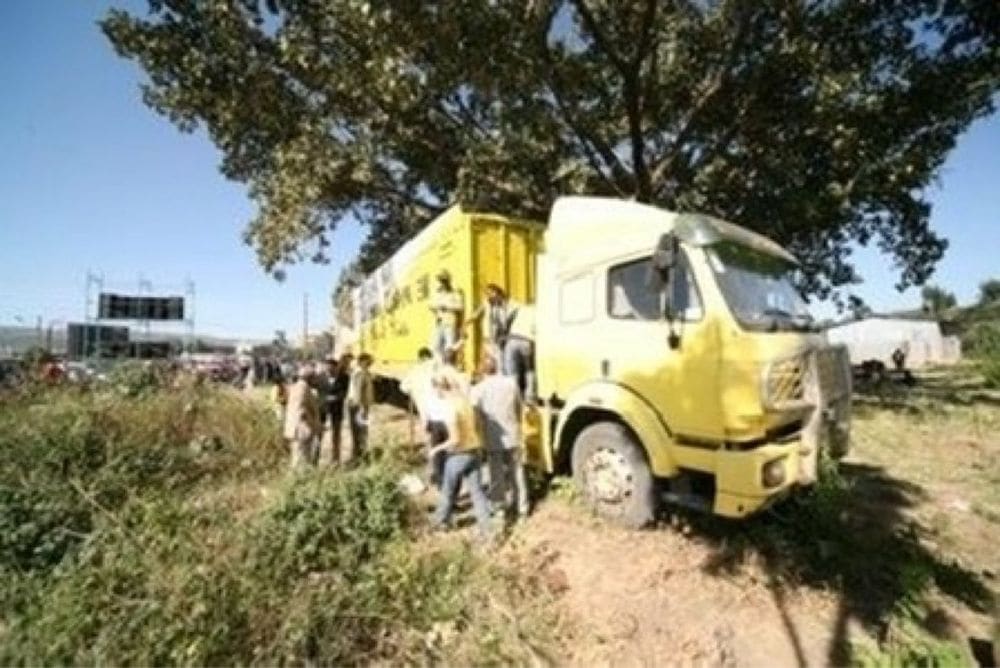
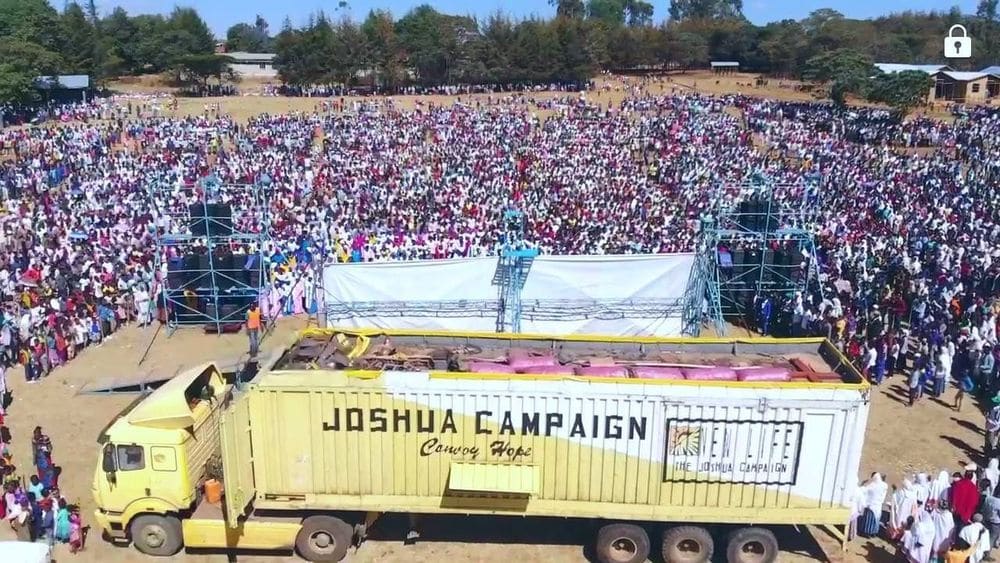
The sound stage on the move
Different generations of mobile trucks carried sound, staging and campaign identity from one field to the next.
About Joshua Campaign
Joshua Campaign was founded in Ethiopia in 1997. These photographs and the founding story are the public record behind today’s work.
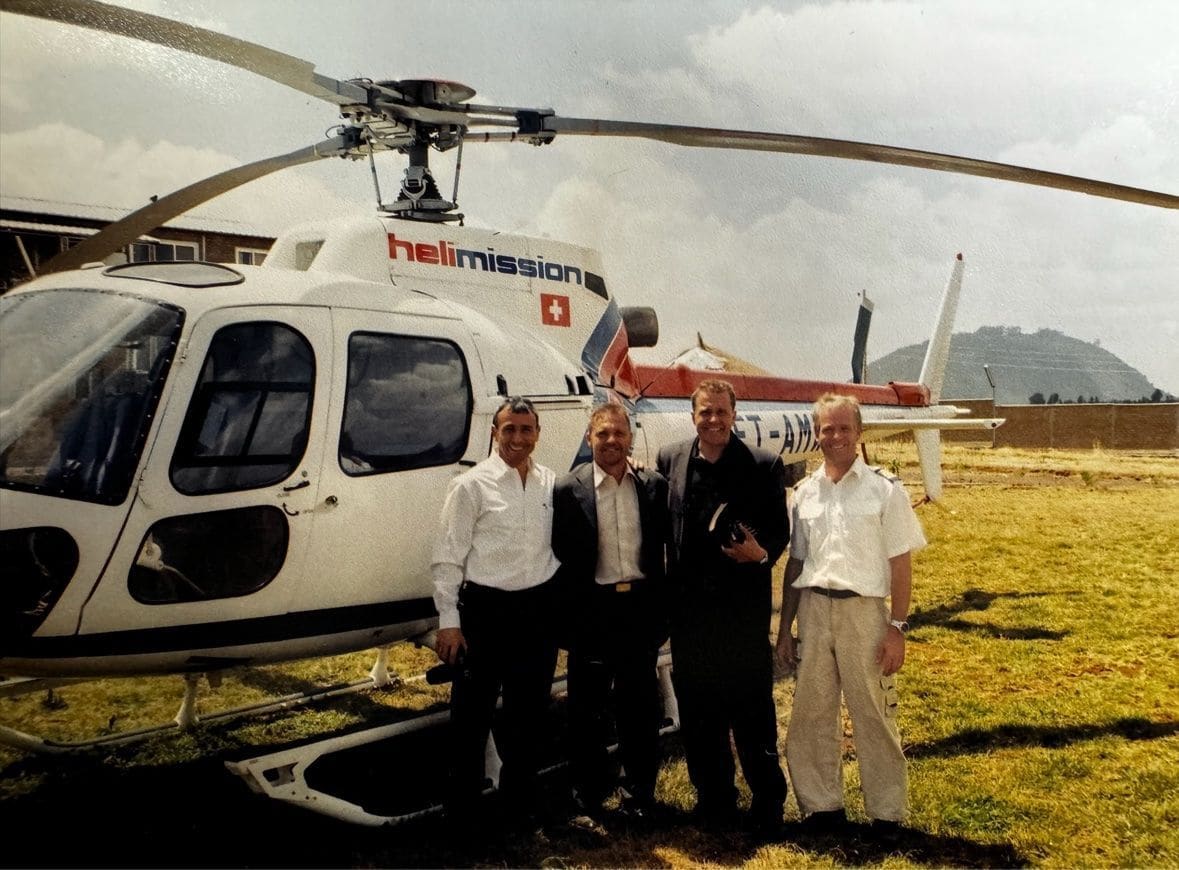
Karl and Jennifer Härgestam founded Joshua Campaign in Ethiopia in 1997. Karl, raised in Storuman in Sweden’s Pentecostal tradition, began mission work in Tanzania in the late 1980s. A call to reach unreached peoples took him to California for helicopter training, where he met Jennifer. They moved to Ethiopia in the early 1990s, and Karl flew with the Swiss organization Heli-Mission before launching Joshua Campaign.
Today the ministry has offices in Ethiopia, Sweden and California, with partners around the world. Since 1997, millions of people—mostly in Ethiopia—have heard the Gospel through its work. The Swedish archive records an earlier milestone of more than 3.8 million salvation books distributed; the campaign’s current milestone is 5.2 million.
Joshua Campaign’s Swedish history also places the ministry within Ethiopia’s wider evangelical growth, describing a rise from about 2% of the population around 1992 to about 20% in its later account. Campaign meetings reach hundreds of thousands in a year, with local churches carrying the work forward.
Since 1997, the work has recorded 4.2 million decisions, mostly in Ethiopia. About 3.37 billion people remain unreached. The aim is to give every person one chance to hear the Gospel.
The Joshua Campaign archive
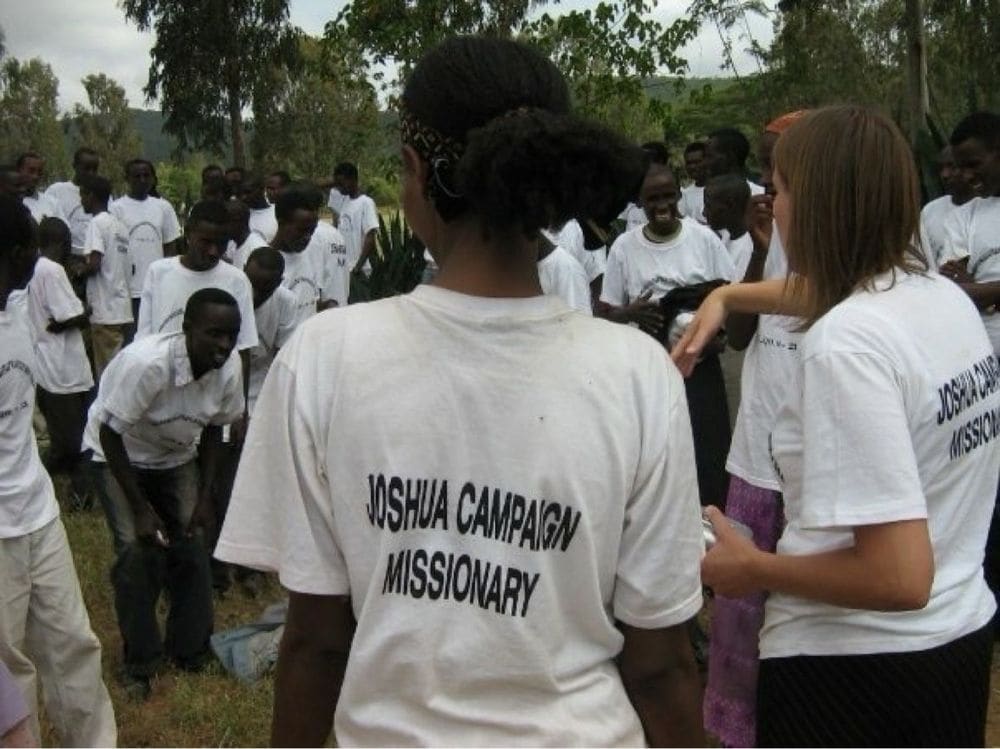
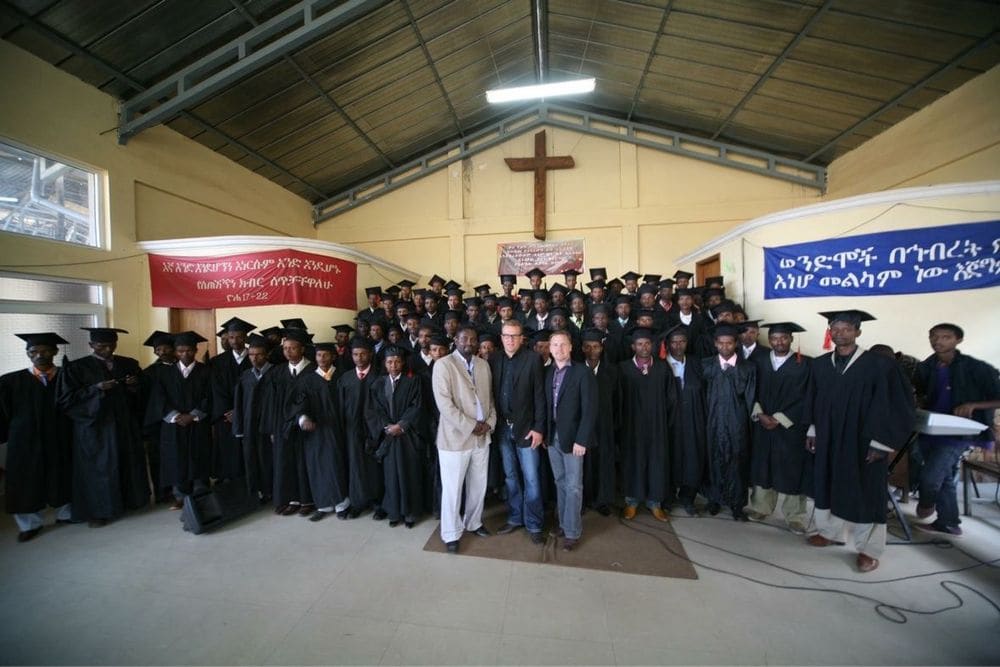
These older photographs preserve the story behind today’s work: Karl and Per serving together, mass campaigns taking shape, teams forming, and field tools changing as the mission reached farther.
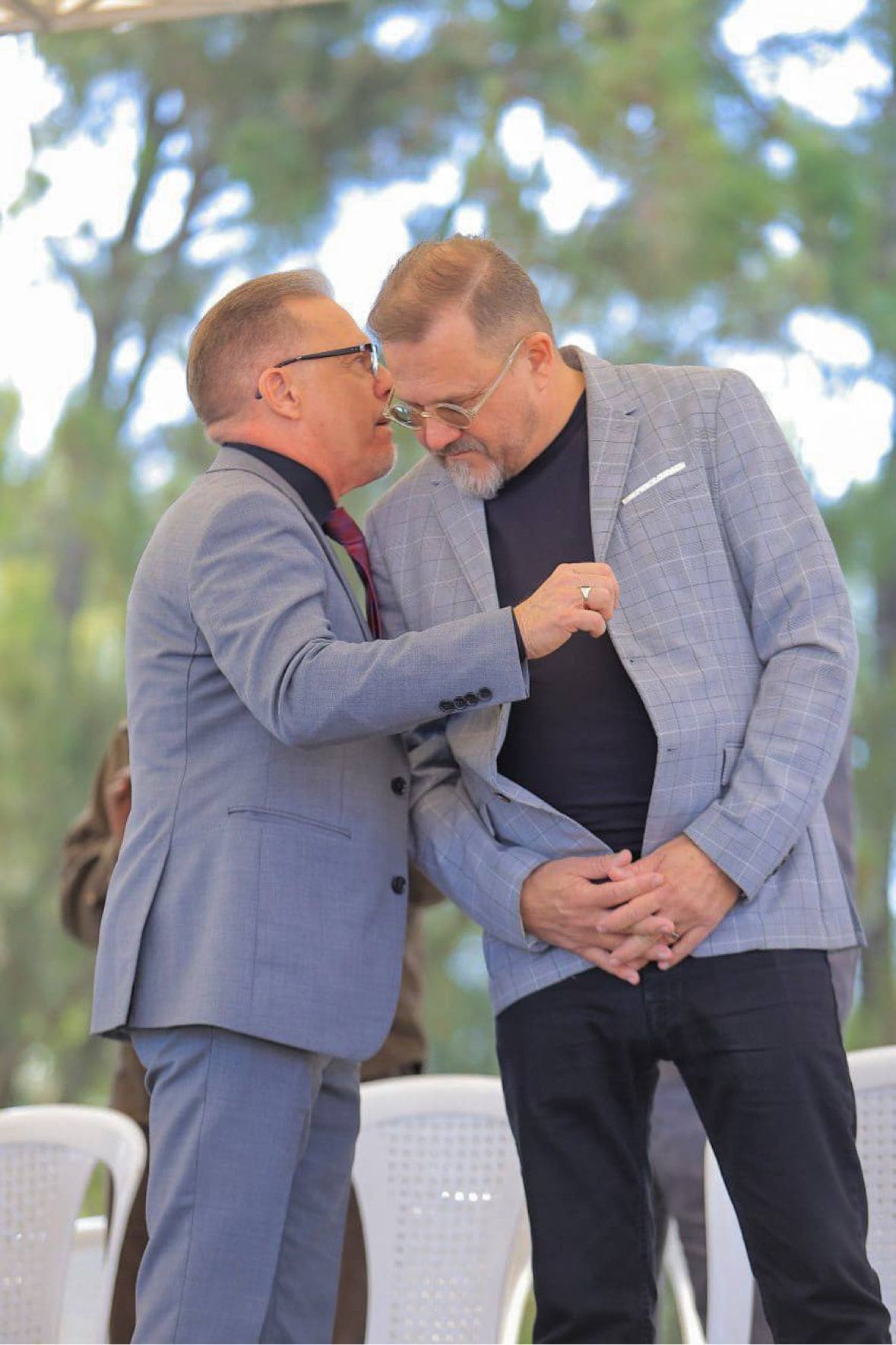
An enduring picture of the handoff between Joshua Campaign’s founding vision and the leadership carrying the mission forward.
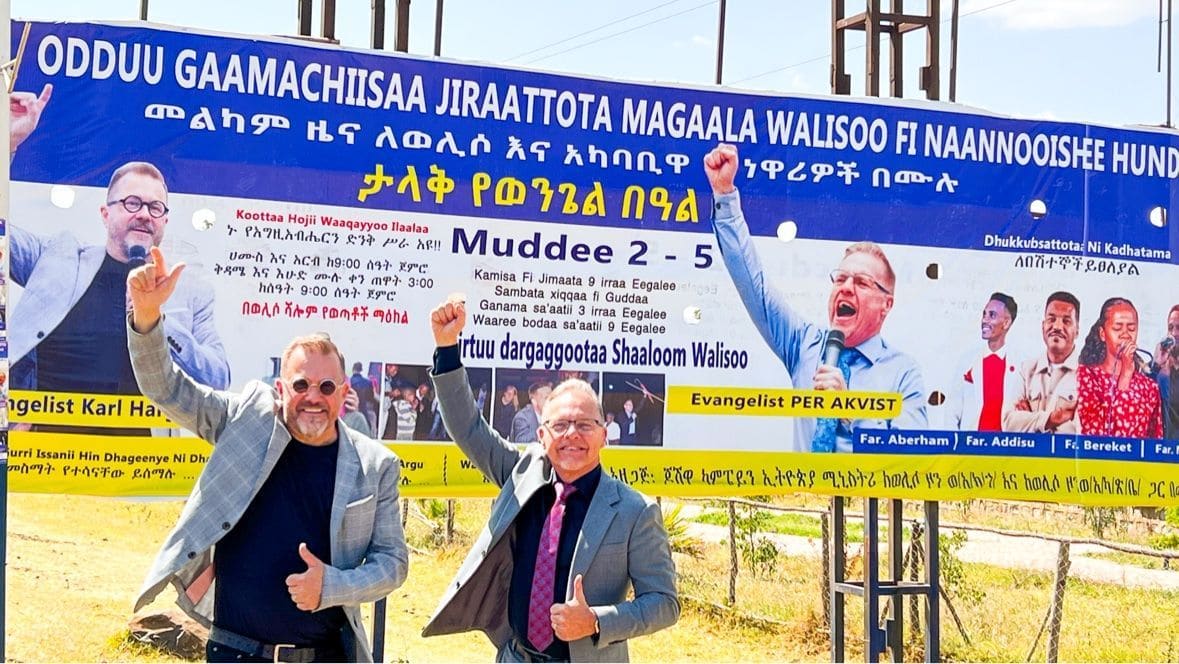
Karl and Per together at a public campaign announcement—an older image with a continuing story.
From daylight fields to evening crusades, the scale changed from place to place while the purpose remained constant: preach Jesus clearly and connect people with local churches.
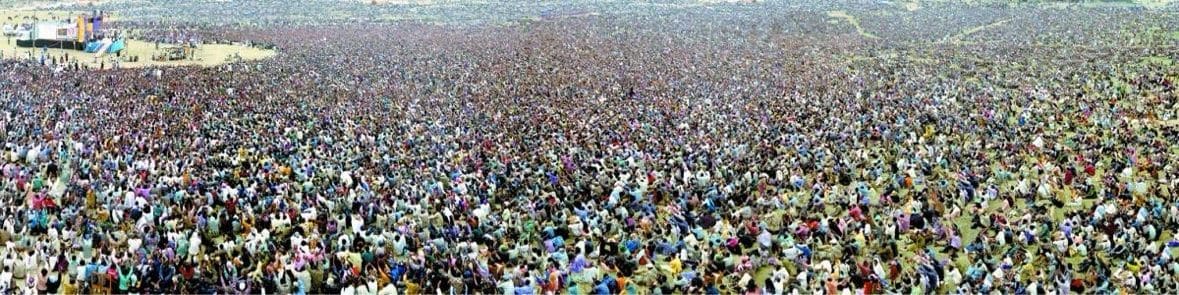
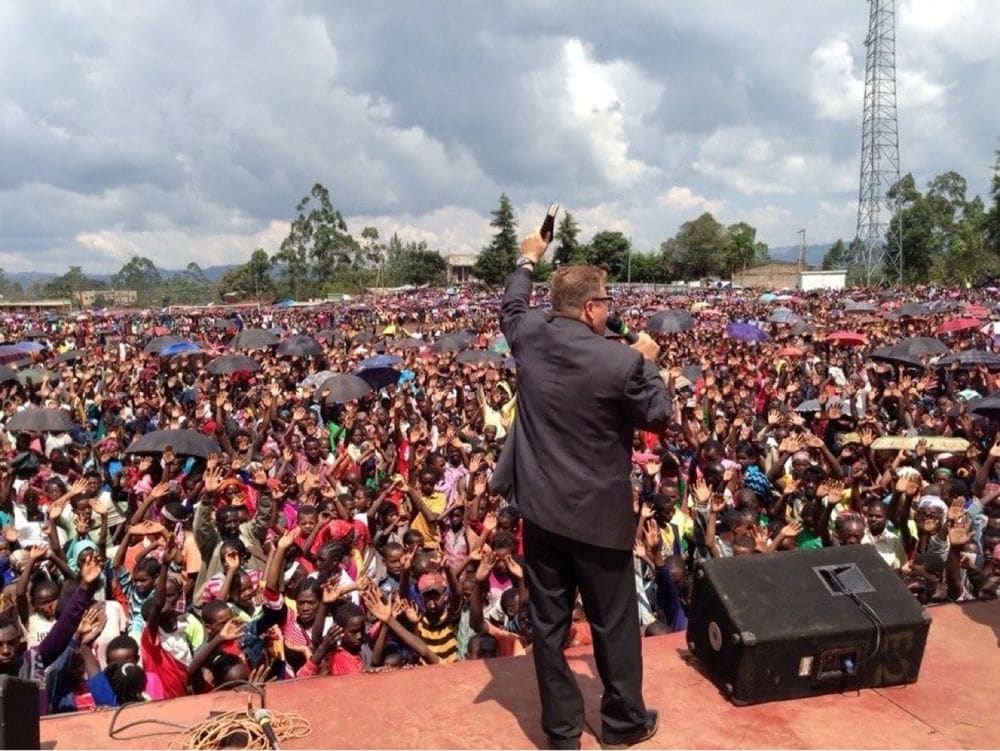
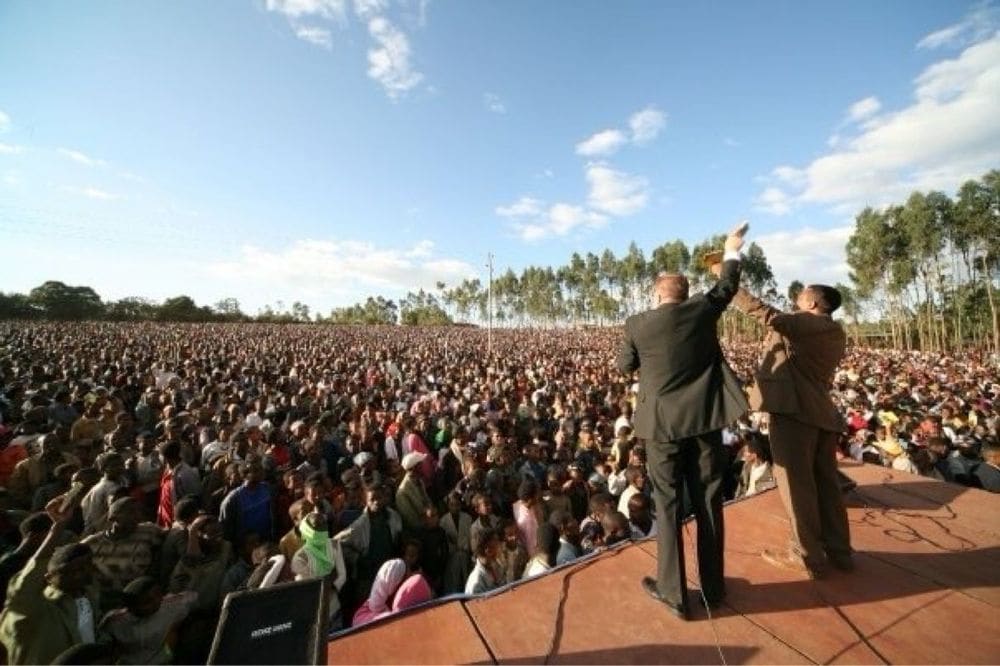
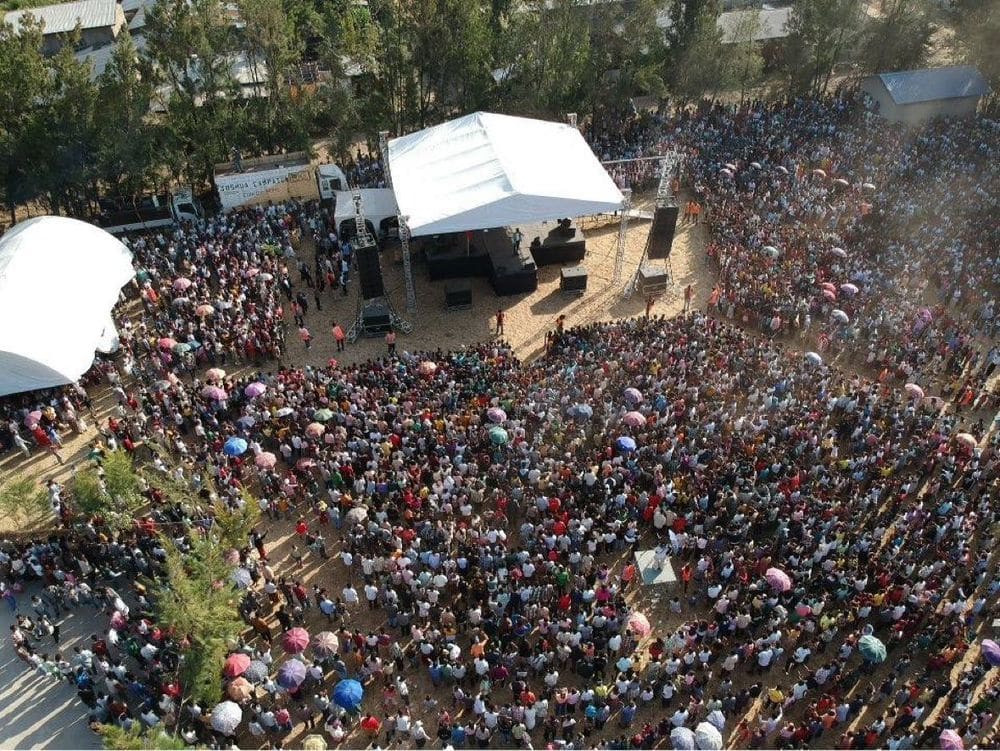
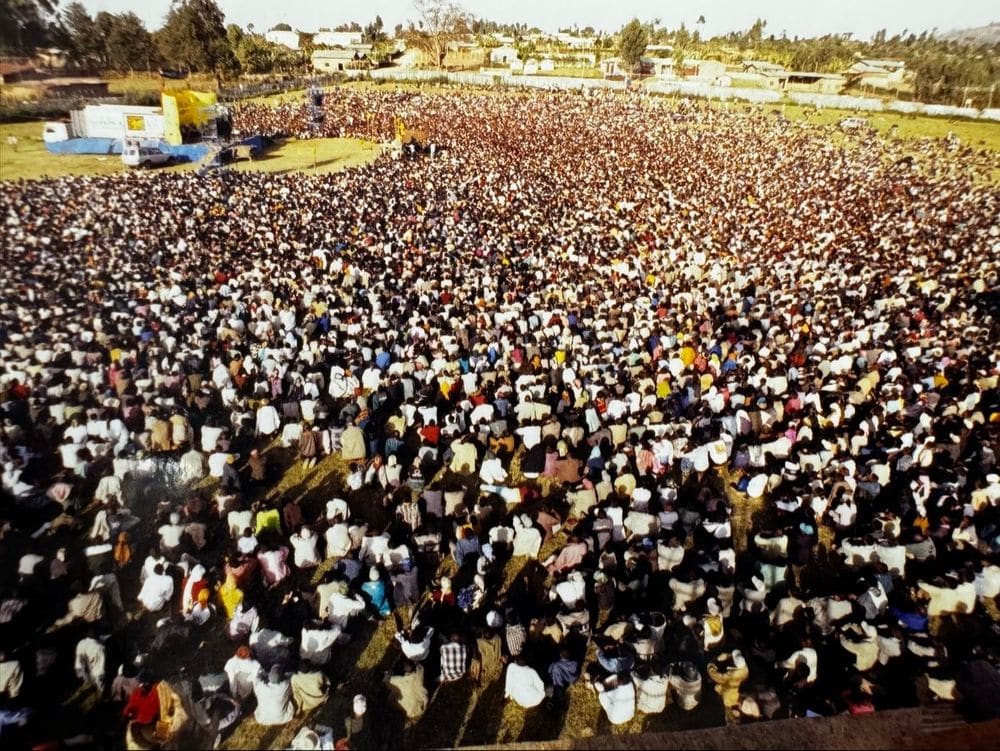
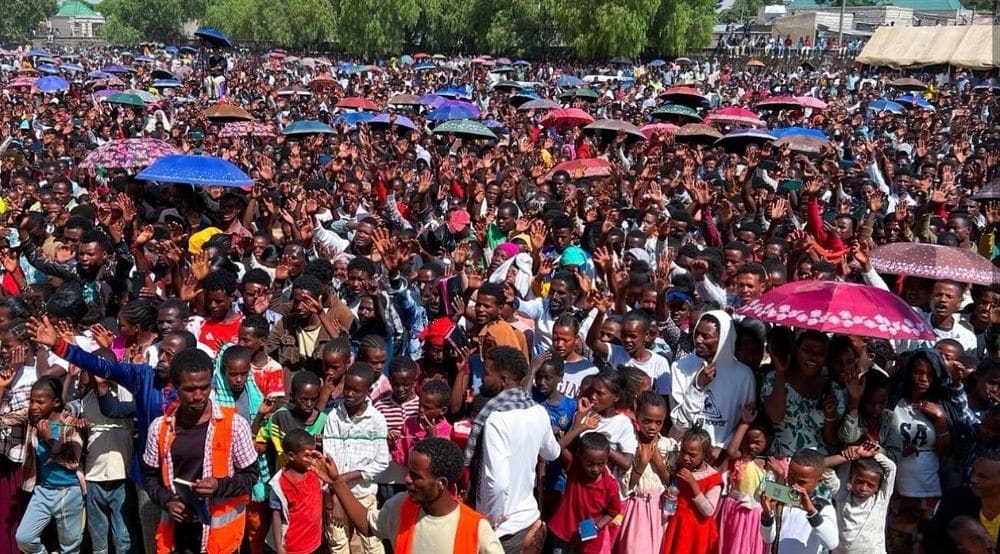
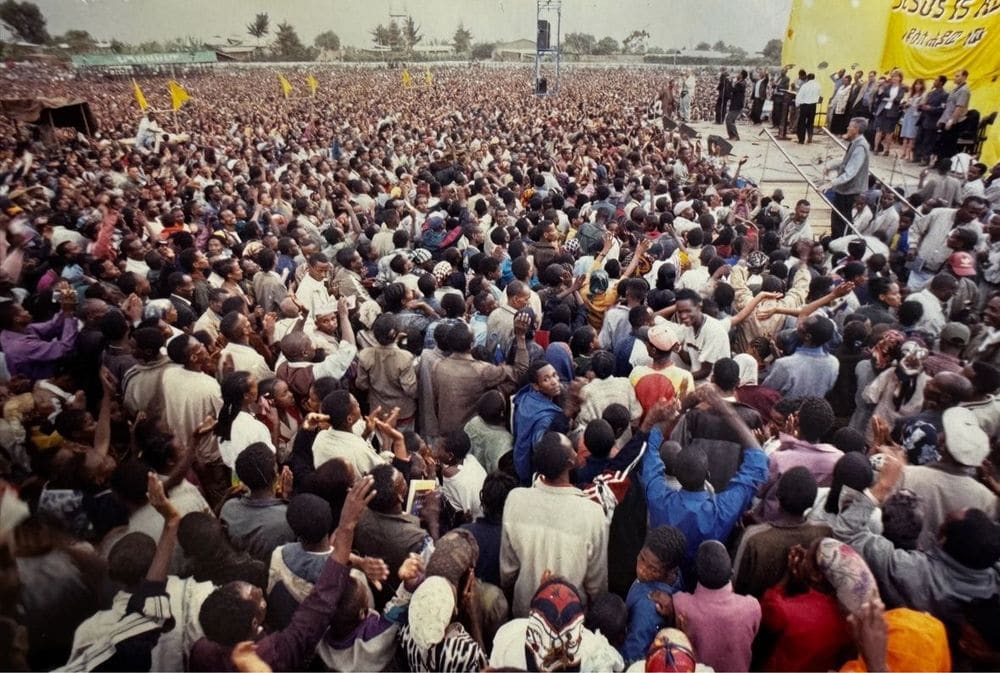
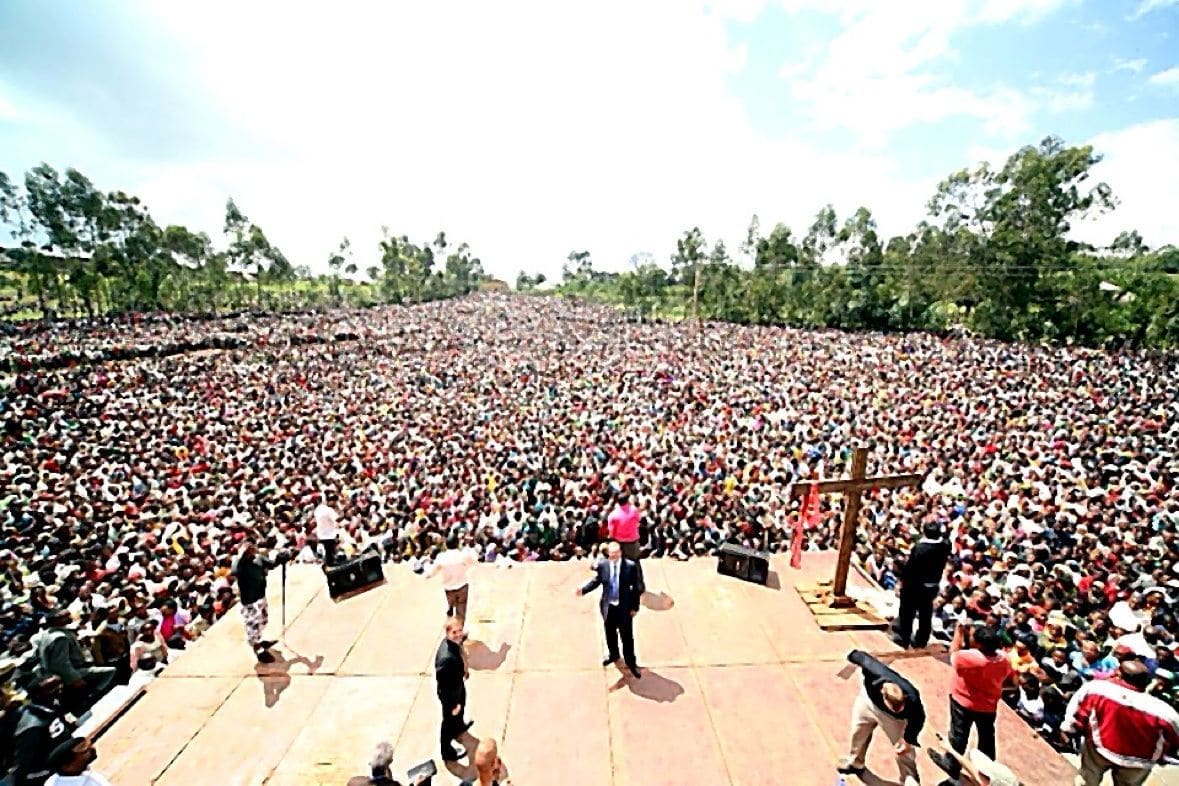
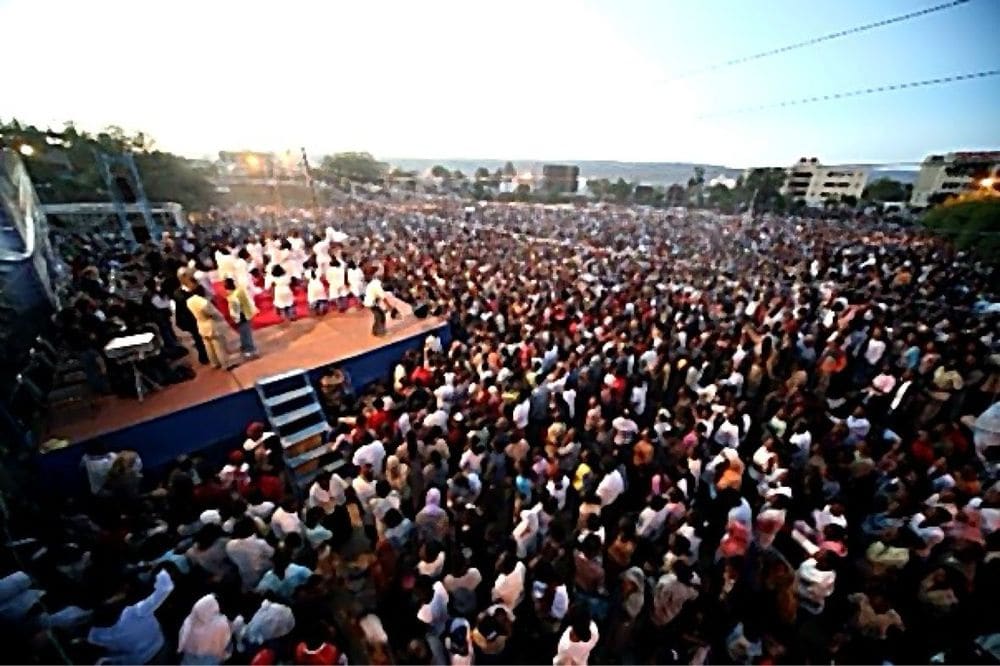
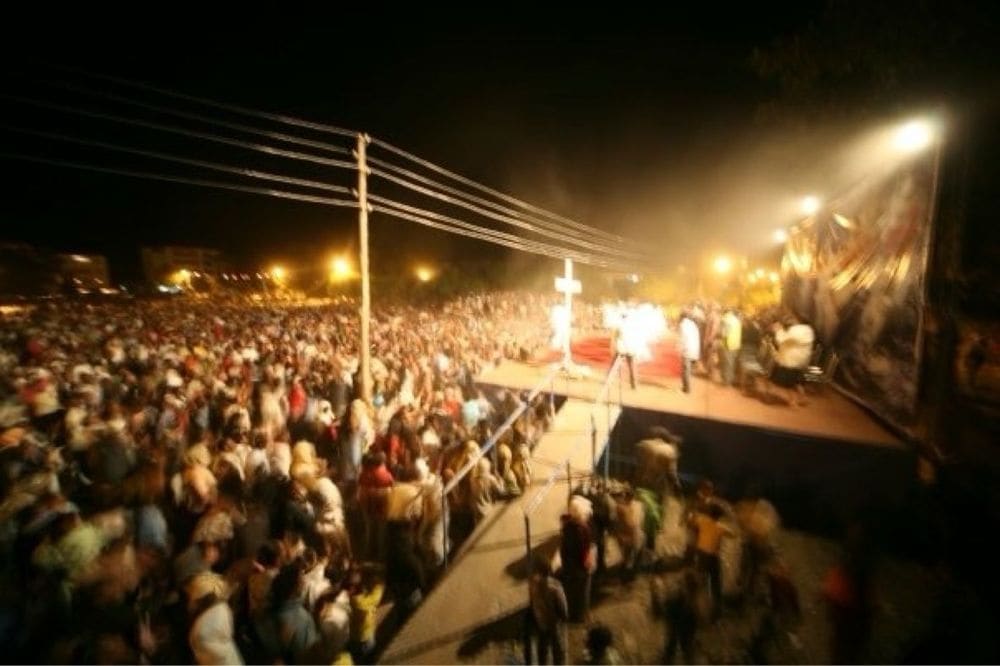
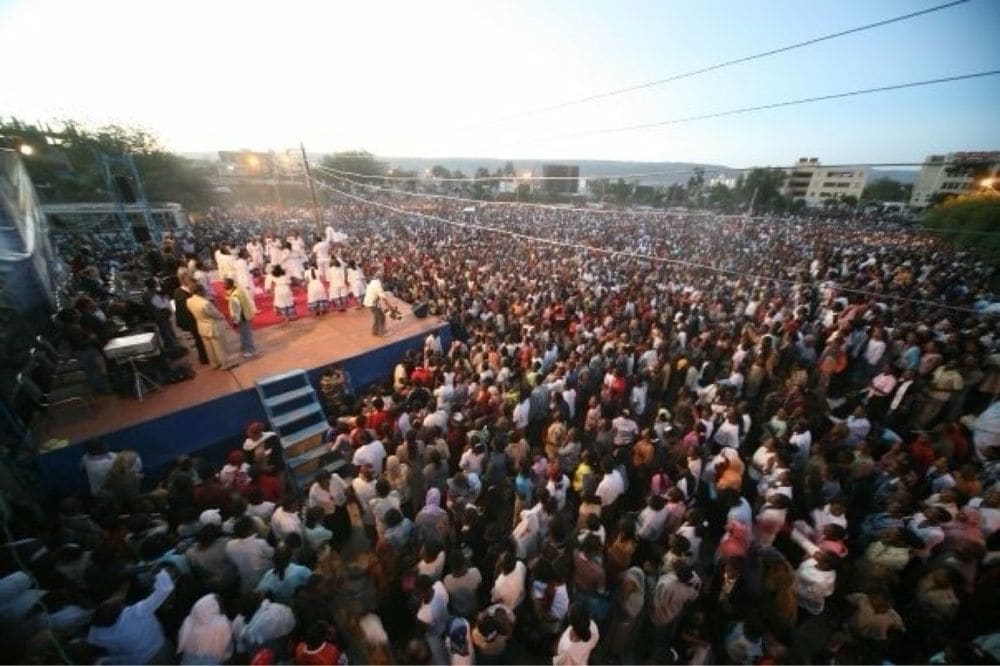
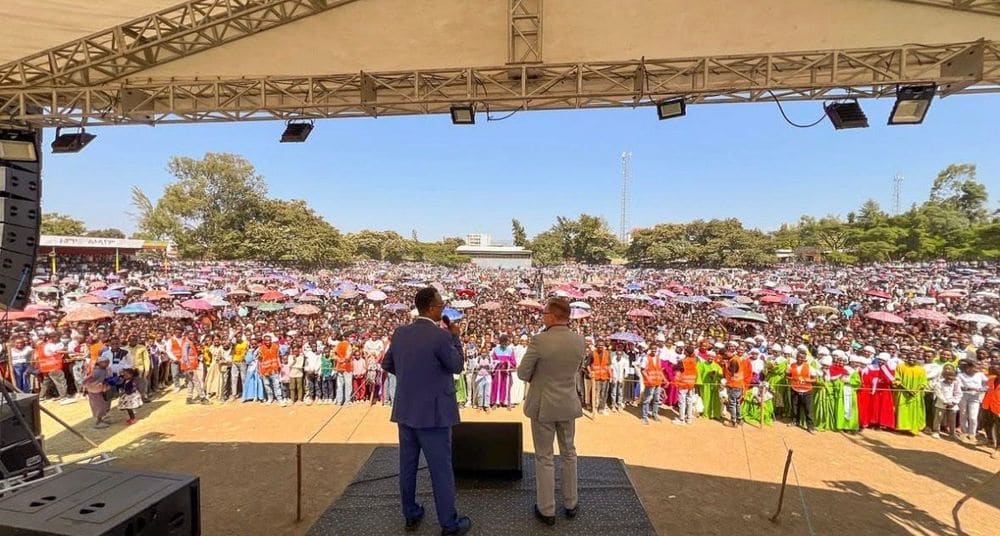
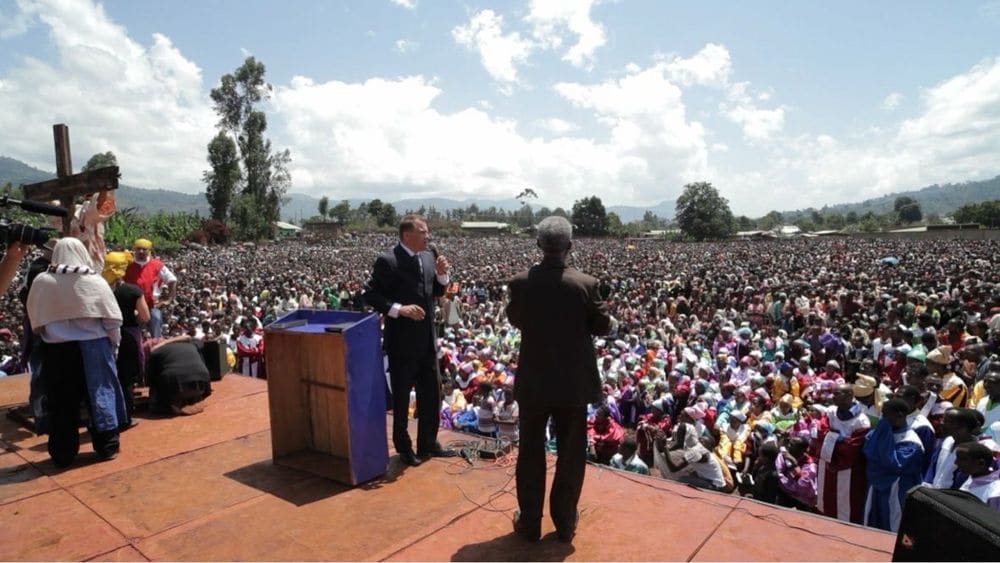
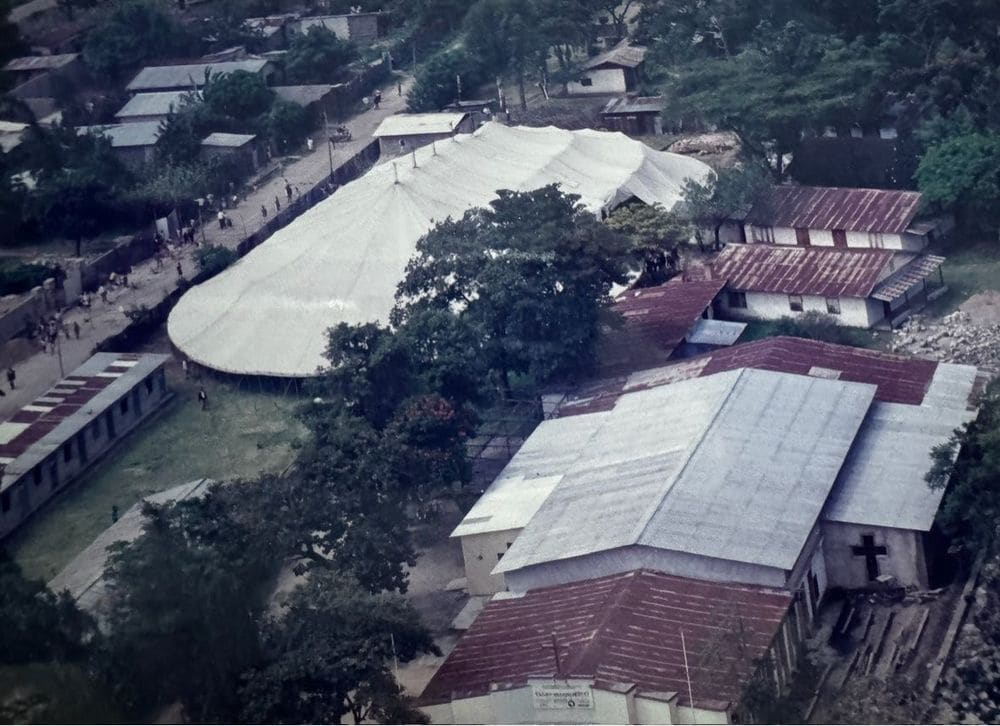
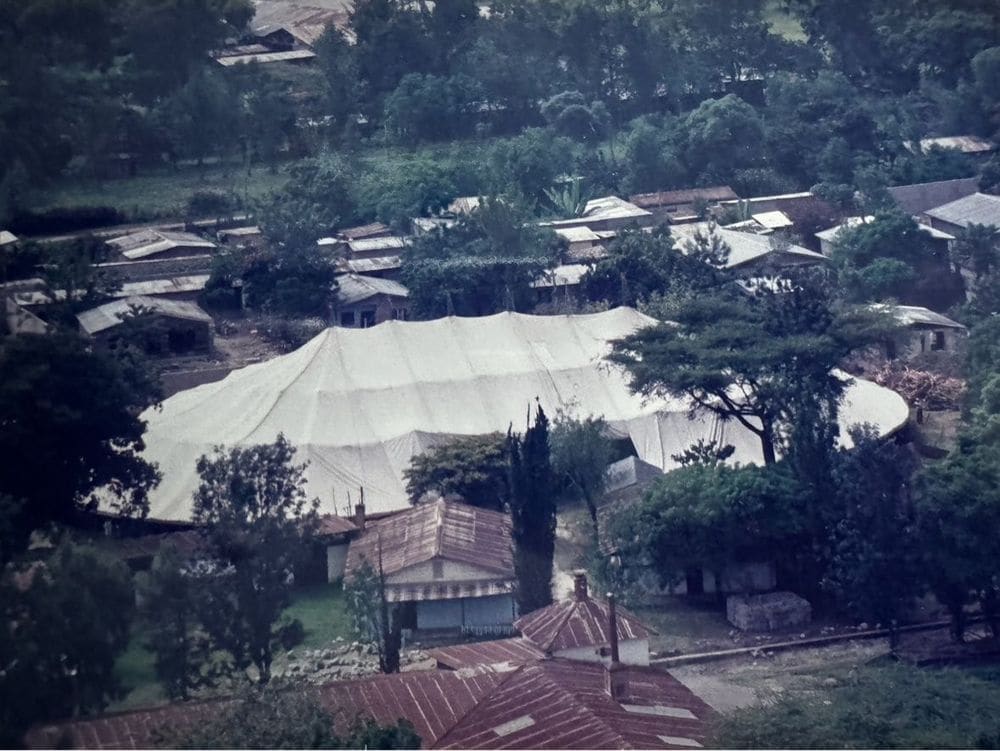
Sound-stage trucks, tents and aviation made open-air campaigns and remote access possible. The equipment evolved over the years; the field purpose stayed the same.
Different generations of mobile trucks carried sound, staging and campaign identity from one field to the next.
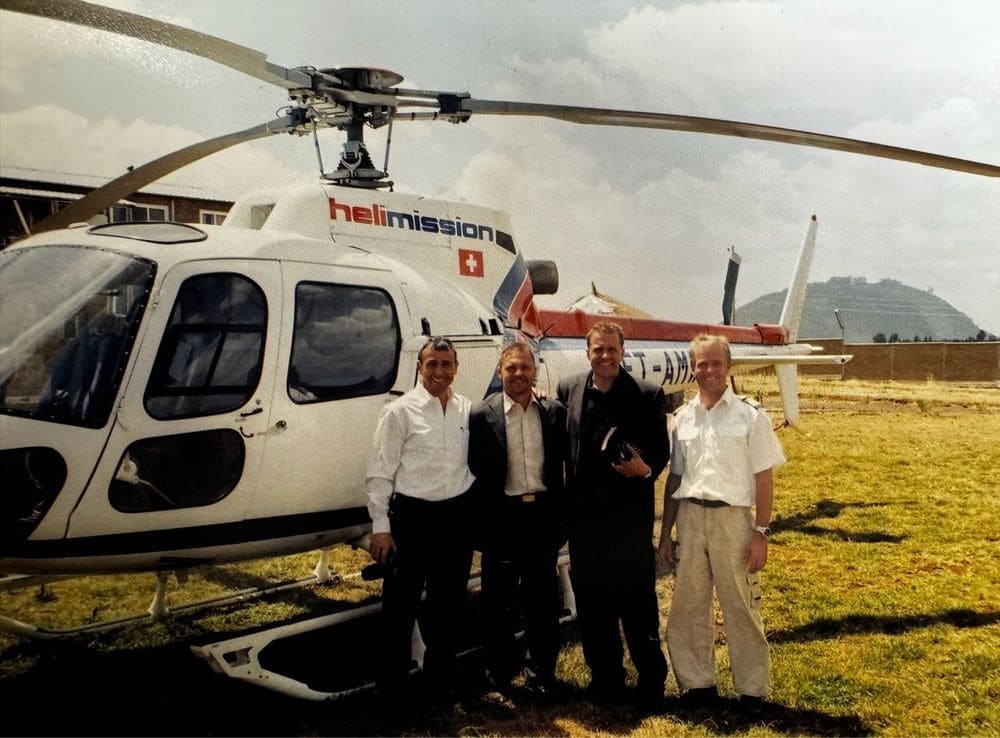
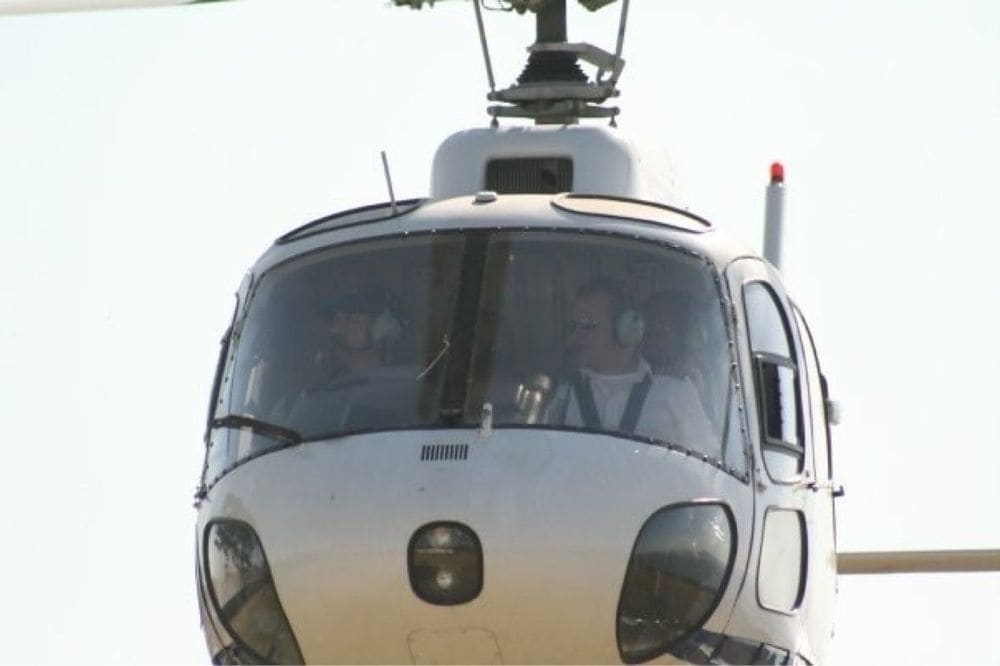
Helicopter access helped teams connect with remote communities and support practical field needs.
Campaigns depended on teams, training and temporary field infrastructure long before the first public meeting began.